“Who is the best physio for sports injuries in Mosman?”
You choose the question. Reputably adds three alternative phrasings.
1 original + 3 variationsReputably is AI visibility tracking and GEO software for the questions your buyers ask across ChatGPT, Gemini, Claude, Google AI Overviews and Google AI Mode. Monitor brand mentions, AI search rankings, sentiment, competitor share of voice, citations, sponsored placements, disclosed fan-out searches and the AI traffic reaching your site.
Your prompt, plus three extra phrasings. Cover more of the ways customers ask the same question across your selected AI engines.
 Live Claude web search. Included in every plan. Track the answer and its disclosed sources, with no separate Claude add-on.
7-day free trial · No card required · All 5 answer surfaces in every plan. Daily tracking, source evidence and AI traffic in one workspace.


Comparing AI tracking with a traditional SEO suite? Our AI rank tracking tools guide separates keyword positions from AI answers. Use the cost worksheet to compare the same workload across vendors.
Each tracked prompt gets three additional phrasings of the same question, giving you four ways to check how AI recommends your business. The intent and location stay the same; the wording changes to reflect how different customers ask.
You choose the question. Reputably adds three alternative phrasings.
1 original + 3 variationsIllustrative phrasings. Reputably generates variations from your own prompts.
Three tracked prompts become twelve wordings. Check visibility across the different phrasings to see how consistently your business appears.
Claude belongs in your AI visibility report from the start. Reputably runs your questions with live web search, then captures the answer, disclosed searches, returned pages and citations. Every plan includes Claude alongside ChatGPT, Gemini, Google AI Overview and Google AI Mode, within its usage limits.
Each original prompt gets three additional phrasings for broader wording coverage. See which questions name your business, which name competitors, and which sources appear in the answer.
How we collect: Claude runs through the Claude Code plan path with web search enabled and no API fallback. This is not a browser recording of Claude.ai, and individual answers can vary. Compare documented Claude coverage across tracking tools.
When someone asks an assistant for “the best family dentist near me”, the answer may name only a handful of businesses. There is no page two to rescue the brands that were left out. That is why Answer Engine Optimization (AEO), Generative Engine Optimization (GEO) and AI search optimization all begin with repeatable measurement.
But an AI ranking alone creates a new question: why did that answer happen? Reputably follows the chain from the buyer's question to the answer, the competitors named inside it, the sources cited underneath it and — where the engine shows its work — the searches and pages it used along the way. That turns “we are at 43%” into a concrete content, review, listing or reputation brief.
Whether you call it an AI visibility tracker, GEO software, an AEO tool or an LLM monitoring platform, the job is the same: measure where your brand appears, preserve the evidence and show what changed.
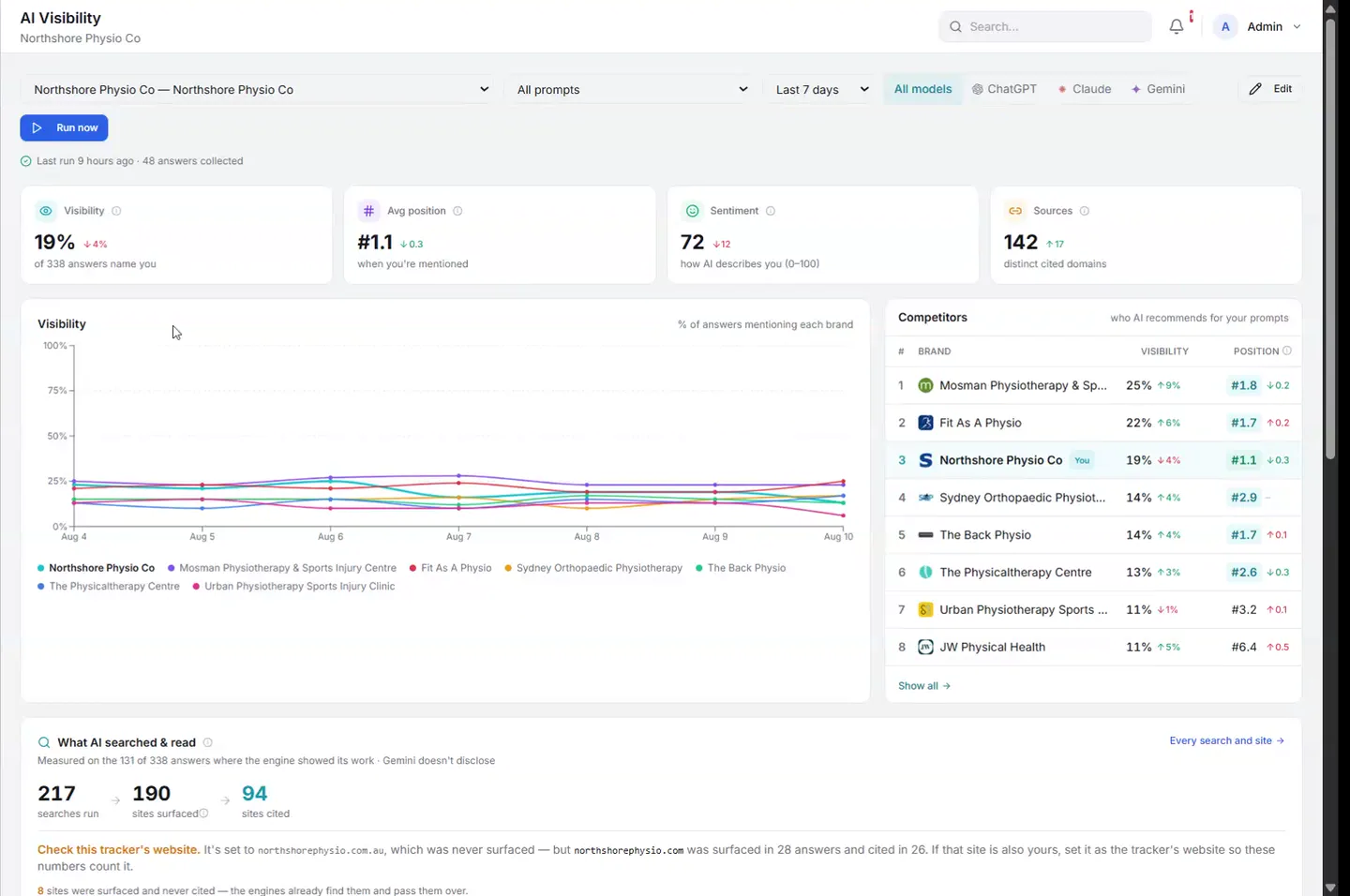
Track brand mentions, position, sentiment and prompt-level visibility across five answer surfaces — including ChatGPT rankings and Google AI visibility.
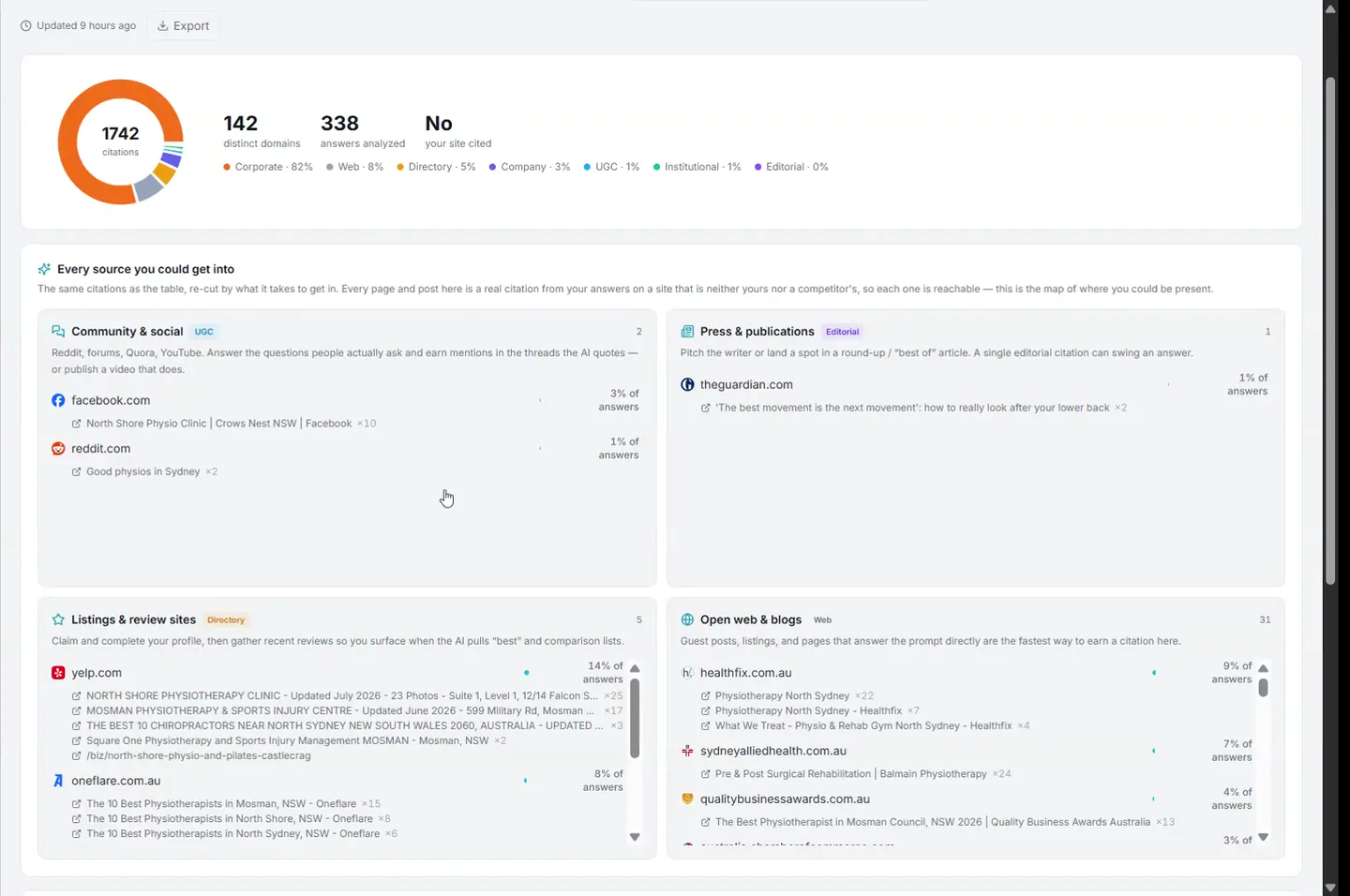
ChatGPT78%Gemini64%Claude71%AI Overview56%AI Mode69%Monitor the domains and exact pages AI answers cite, then separate sources you can earn from competitor-owned sites and pages merely passed over.
Compare AI brand visibility against the businesses recommended beside you. See who wins each buyer question, model and date range.
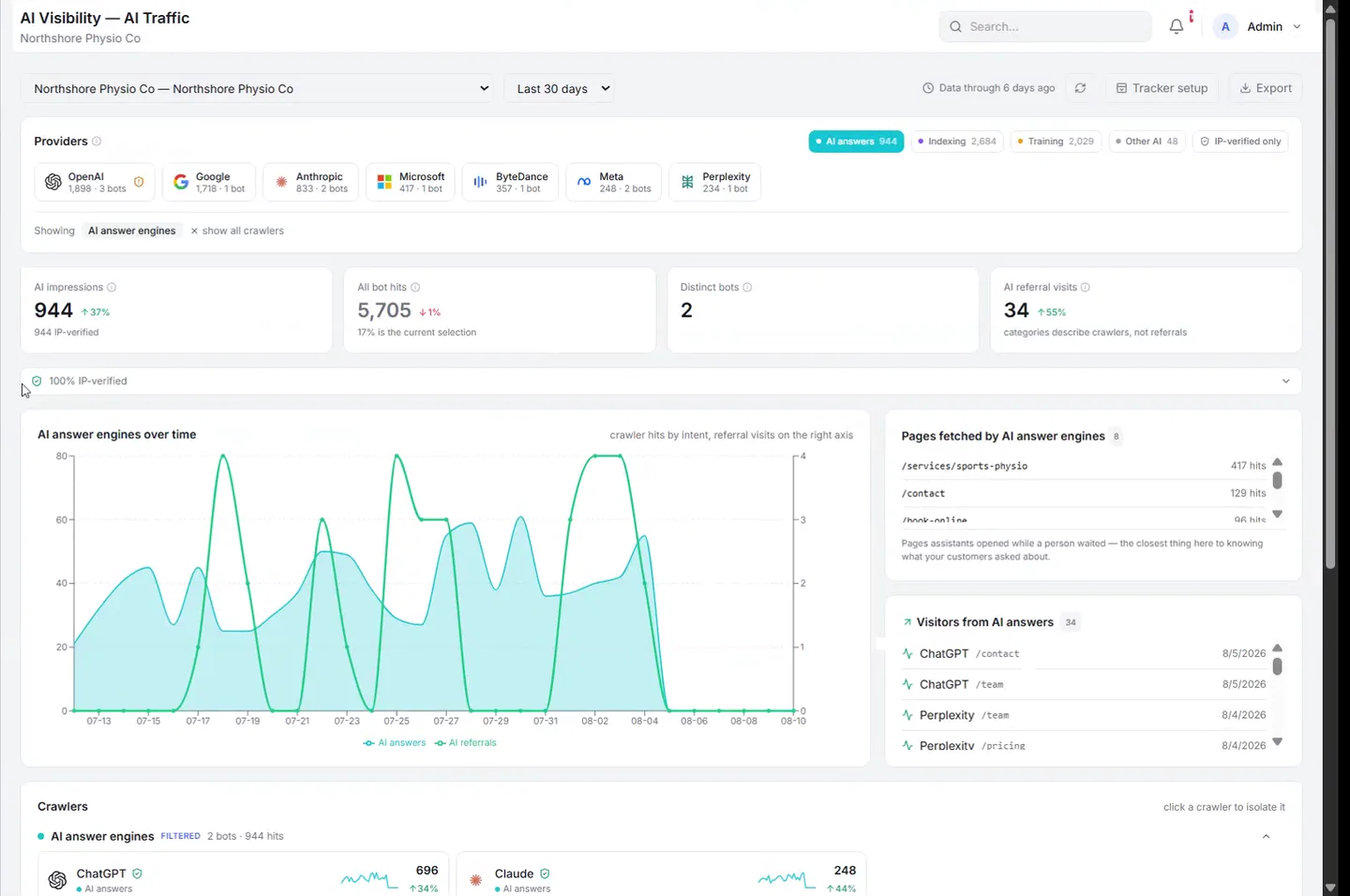
Measure AI crawler impressions, pages fetched and detectable referral visits separately, so bot activity never gets confused with human traffic.
Answer-time crawlersReferral visits
AI answers are produced through a chain of choices. Reputably gives each stage its own view, so a missing citation never gets confused with a missing mention and an undisclosed trail never gets reported as zero.
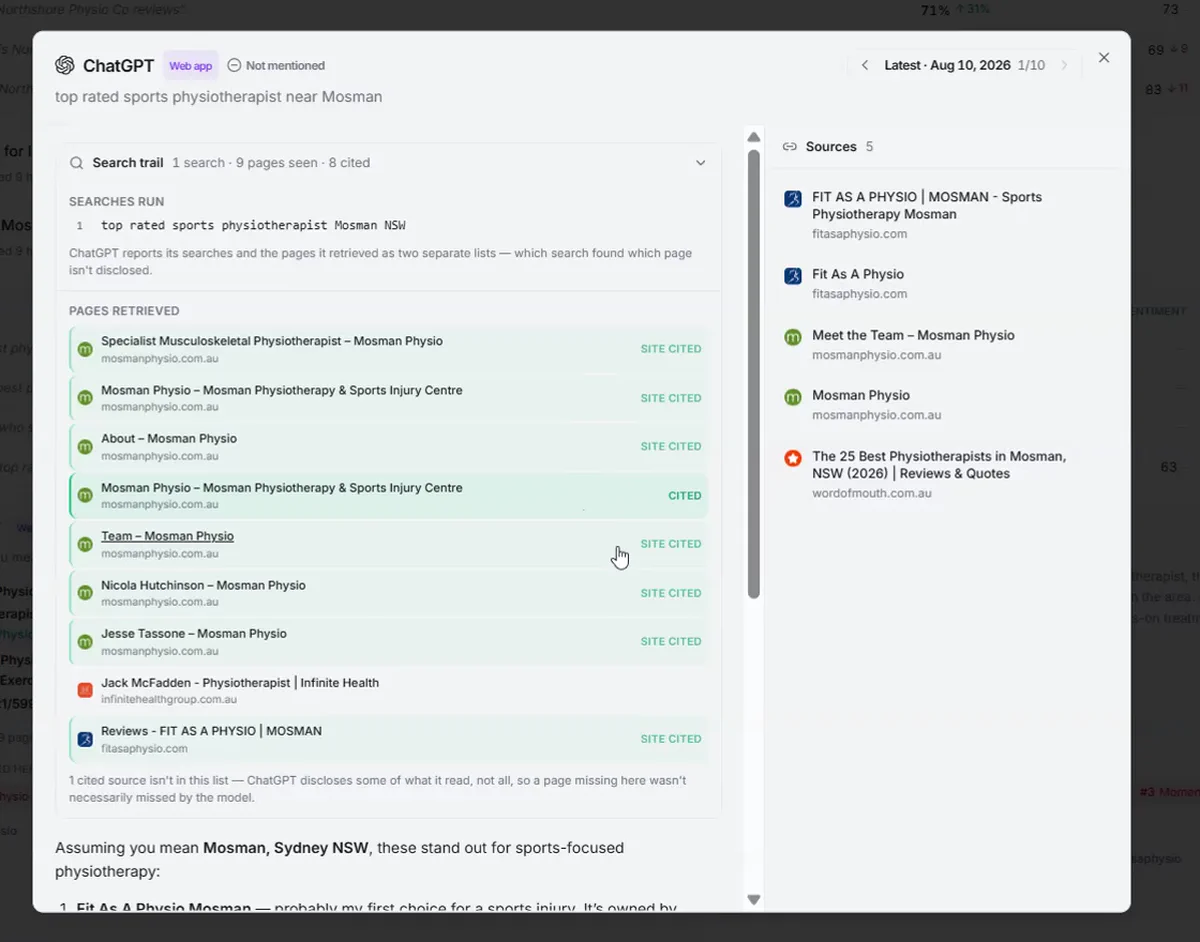
Measured, never guessed: Claude discloses a traceable search-and-page trail. ChatGPT's trail is partial. Gemini, AI Overview and AI Mode return answers and sources without the searches behind them. Reputably labels those differences instead of turning vendor silence into a false zero.
See the pattern across real buyer questions instead of treating one screenshot as a permanent rank.
A tracked prompt is only the start. Answer engines often rewrite it into several searches before they compose a response. Those rewrites are the closest thing AI visibility has to keyword-level demand data.
Know which domains and pages answer engines lean on, which rivals appear, and where your own site is being found, cited or passed over.
Commercial questions can attract paid placements. Reputably records that paid layer without mixing it into the organic visibility score or presenting an advertiser as an AI recommendation.
Shown Not shown · paid placements remain separate from recommendations
Install both halves of the lightweight Reputably tracker to connect answer visibility with what reaches the website, then verify the complete path from one setup flow.
Every plan tracks ChatGPT, Gemini, Claude, Google AI Overview and Google AI Mode. Retrieval detail and surface availability are reported according to what each experience actually returns.
Track answer text, brand presence, sentiment, position, competitors and citations. Search and retrieved-page trails can be partial, so absence is not treated as proof that a page was never considered.
Partial retrieval trailTrack answer visibility, sentiment, position, competitor mentions and available citations. When Gemini does not disclose its searches, the report says so rather than drawing a zero.
Search trail not disclosedRun your questions through live Claude web search, included in every plan. Inspect the answer and connect disclosed searches to the pages returned and cited through Claude’s tool-use trail.
Traceable retrieval trailTrack the overview that may appear above Google's search results, including brand presence, position, sentiment, competitors and references. When Google does not generate one, Reputably reports the surface as absent and excludes it from the score.
Absence is not a visibility missTrack Google's standalone conversational search experience separately from AI Overview. Its answers and references are scored independently because the two Google surfaces can return different brands and sources.
Search trail not disclosedAI visibility tracking measures whether answer surfaces such as ChatGPT, Gemini, Claude, Google AI Overviews and Google AI Mode mention or recommend your business for the questions buyers ask. Reputably tracks visibility, sentiment, position, competitors and change over time, then connects the answer to its cited sources and, where a surface discloses them, the searches and pages used before the answer was written.
Each tracked prompt gets three additional phrasings of the same question, giving you four ways to check how AI recommends your business. With three tracked prompts, that is three originals plus nine variations: twelve wordings. These are Reputably-generated prompt variations; fan-out searches are the searches an AI engine itself discloses while answering.
A fan-out search is a query an answer engine creates from the question a user asked. A prompt such as “best physio in Mosman” may become several searches about sports physiotherapy, reviews and local providers. Reputably records the searches an engine discloses so you can see the language and source pool behind the answer.
ChatGPT, Gemini, Claude, Google AI Overview and Google AI Mode are included in every plan. The two Google experiences are measured separately because they can return different answers and source sets. When an AI Overview is not generated for a search, Reputably reports that availability rather than counting it as a brand miss.
Prompt-level visibility, sentiment and position; competitor performance; cited domains and pages; disclosed fan-out searches; sites surfaced but passed over; sponsored placements kept separate from organic visibility; and AI traffic such as answer-engine crawler hits and detectable referral visits when the site tracker is installed.
Yes. AI Traffic uses a server-side channel for crawler impressions and a separate browser beacon for detectable referral visits. The setup flow verifies both halves independently, because AI crawlers do not run browser JavaScript and referral detection happens in the visitor's browser.
Yes. Reputably is AI visibility tracking software for Generative Engine Optimization (GEO) and Answer Engine Optimization (AEO). It monitors brand mentions, rankings, sentiment, competitors, share of voice, citations, disclosed fan-out searches and AI traffic across five answer surfaces.
Yes. Reputably tracks ChatGPT, Gemini, Claude, Google AI Overview and Google AI Mode separately. It records prompt-level brand visibility, position, sentiment, competitors and available citations. If Google does not generate an AI Overview, that surface is marked unavailable instead of being counted as a brand miss.
Start with the evidence behind the weak answers: the buyer phrasings the engines use, the sources and competitors they surface, the pages they cite, and the pages they fetch but pass over. Use that evidence to strengthen useful content, listings, reviews and genuine community proof, then track whether visibility, sentiment, position and citations improve.
No. Reputably measures answers and the available evidence behind them. It helps teams decide what to improve, but answer engines remain independent and their outputs vary by prompt, model, location, timing and session context.
Those are different results. Imagine an answer linking to your buying guide while recommending another company. Your page helped support the answer, but your product wasn't one of its suggestions. This is a fictional example, not a customer result.
Use the worked reporting example and blank report template to explain the result to a client. Fan-out searches are available only where the engine discloses them; an empty search list doesn't establish that no search occurred.
Start your 7-day free trial, then add and activate your business to set up monitoring. No card required. No social accounts needed for lead monitoring.
Start free trialSeparate the question asked, searches disclosed, pages surfaced and sources cited. Repeated searches can reveal a useful content gap; they do not measure search demand or guarantee a recommendation.
Read the fan-out content workflow and inspect our seven-day Reputably study, including its methodology and written findings.