How to test social listening coverage before buying
Check known public conversations against a clear coverage brief, then record what appeared, when it arrived and what still needs an answer.
Read the guidePractical guides and original research on finding local buyer intent, understanding AI searches, and turning evidence into useful next steps.
Check known public conversations against a clear coverage brief, then record what appeared, when it arrived and what still needs an answer.
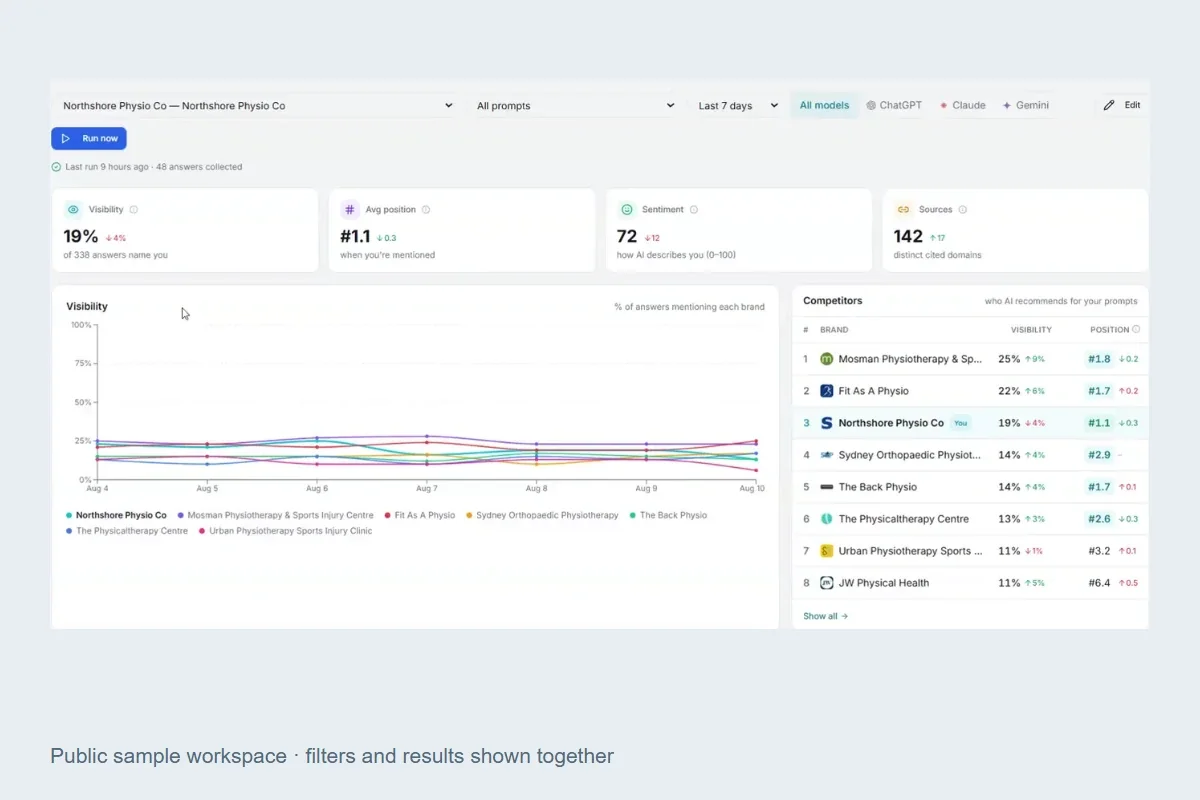
Read the guideA buying brief and two scorecards to help you choose software without confusing a search position with an AI recommendation.
Read the guideA negative label tells you where to look. Reading the conversation tells you what needs to happen next.
Read the guideAn announcement going live is the beginning. Follow who picked it up, what people understood and which questions your team needs to answer.
Read the guideBoth tools help you find buying conversations. The choice depends on what else your team needs to do once a useful conversation turns up.
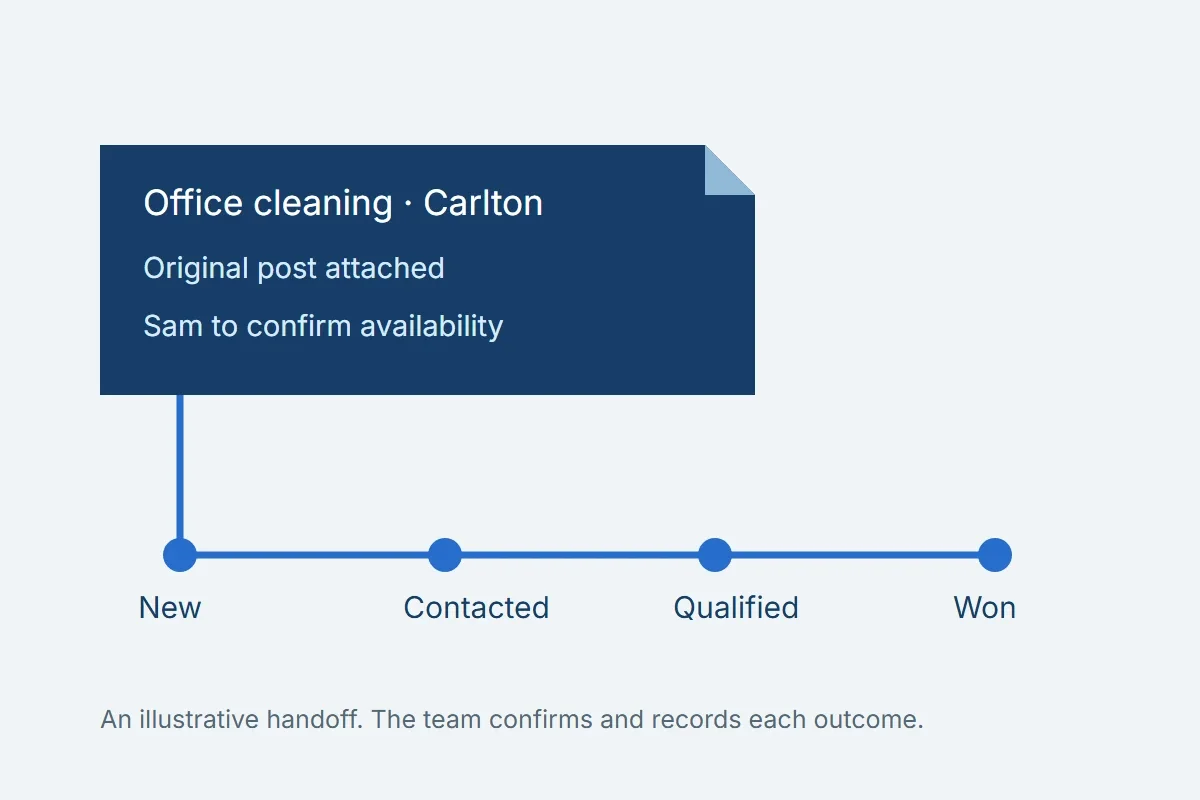
Read the guideFinding a request is only the first step. Give each client a clear owner, enough context to respond and a record of what happened next.
Read the guideA national conversation can look like a lead until you check the address. Here’s how to choose a tool for the jobs you can actually take.
Read the guideA repeatable test protocol for prompts, clean context, citations, missing answers and changes to your website.
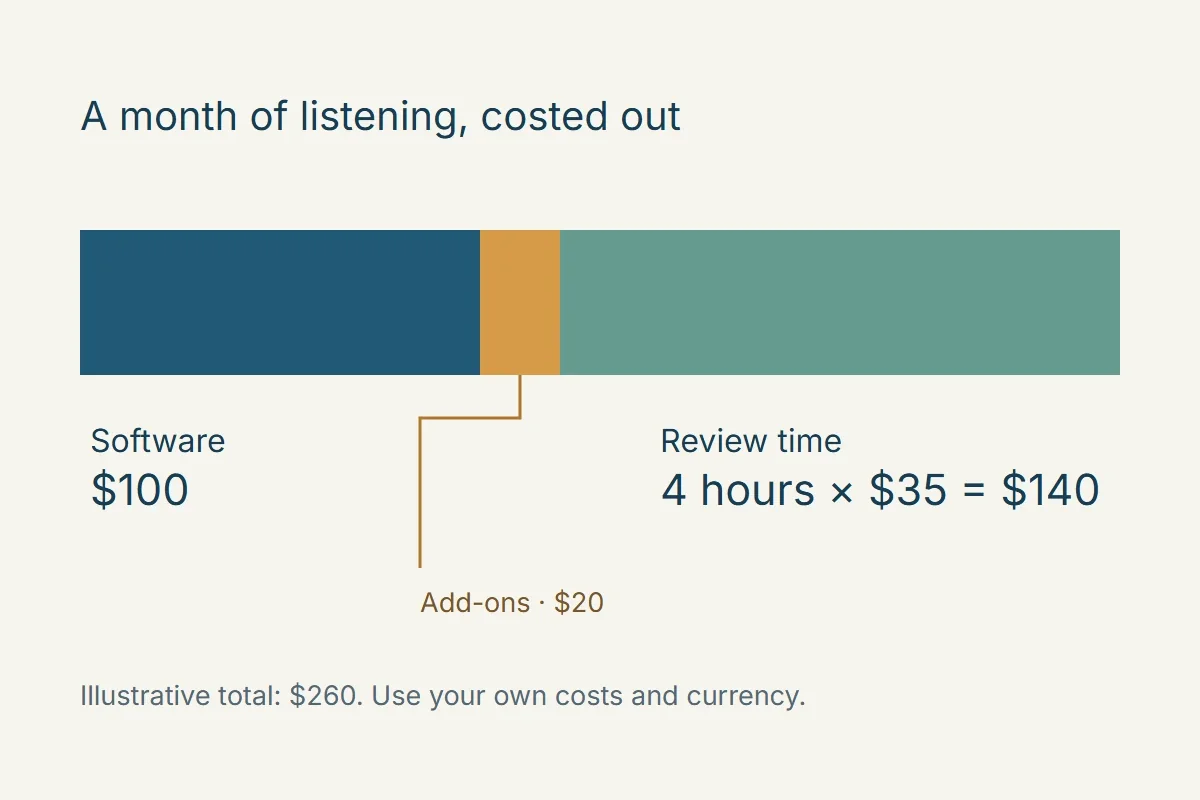
Read the guideA practical budget worksheet for comparing signals, keywords, seats, source coverage and the time spent reviewing results.
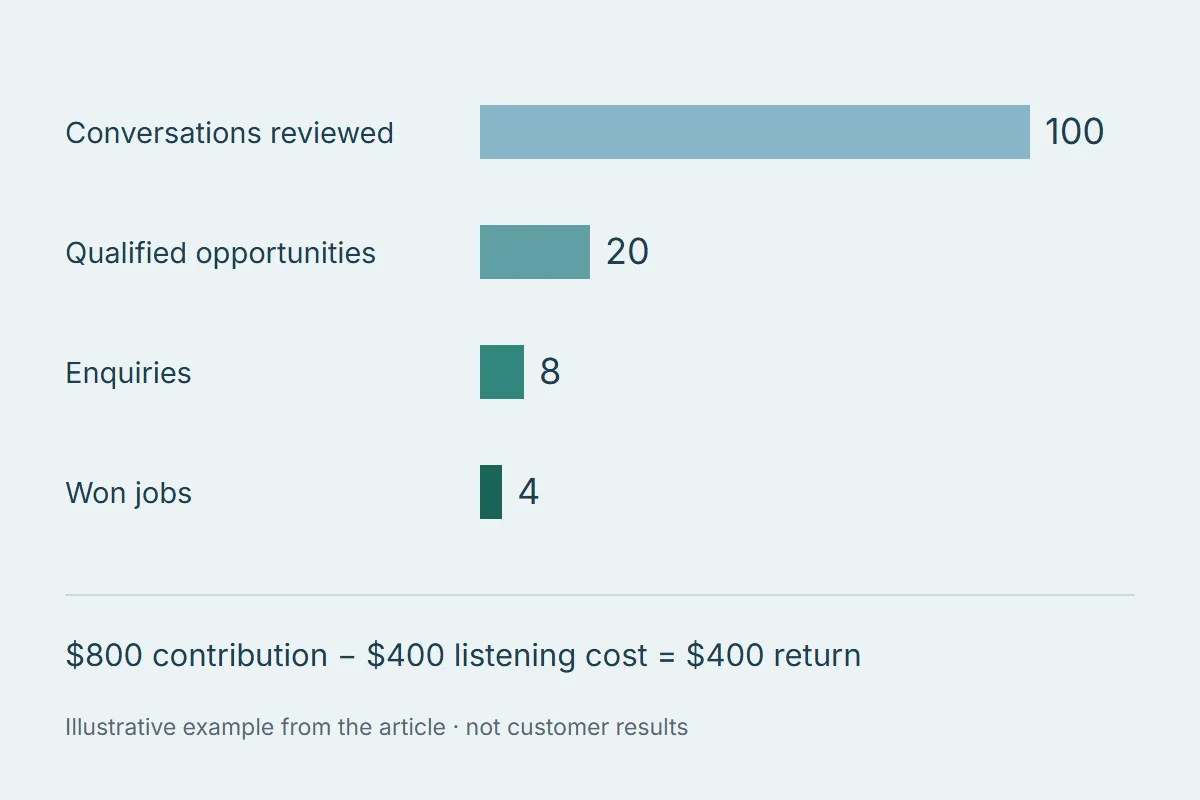
Read the guideMeasure the path from a useful conversation to paid work, including the cost of review time and the limits of attribution.
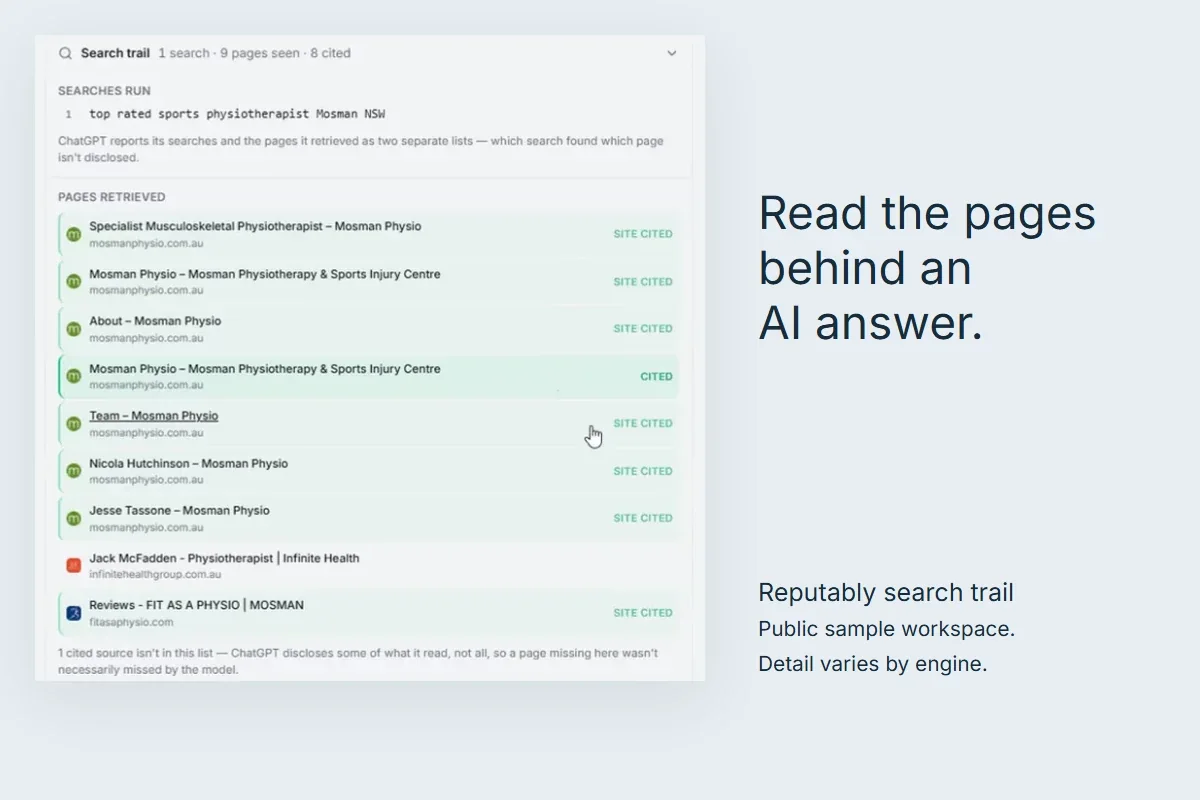
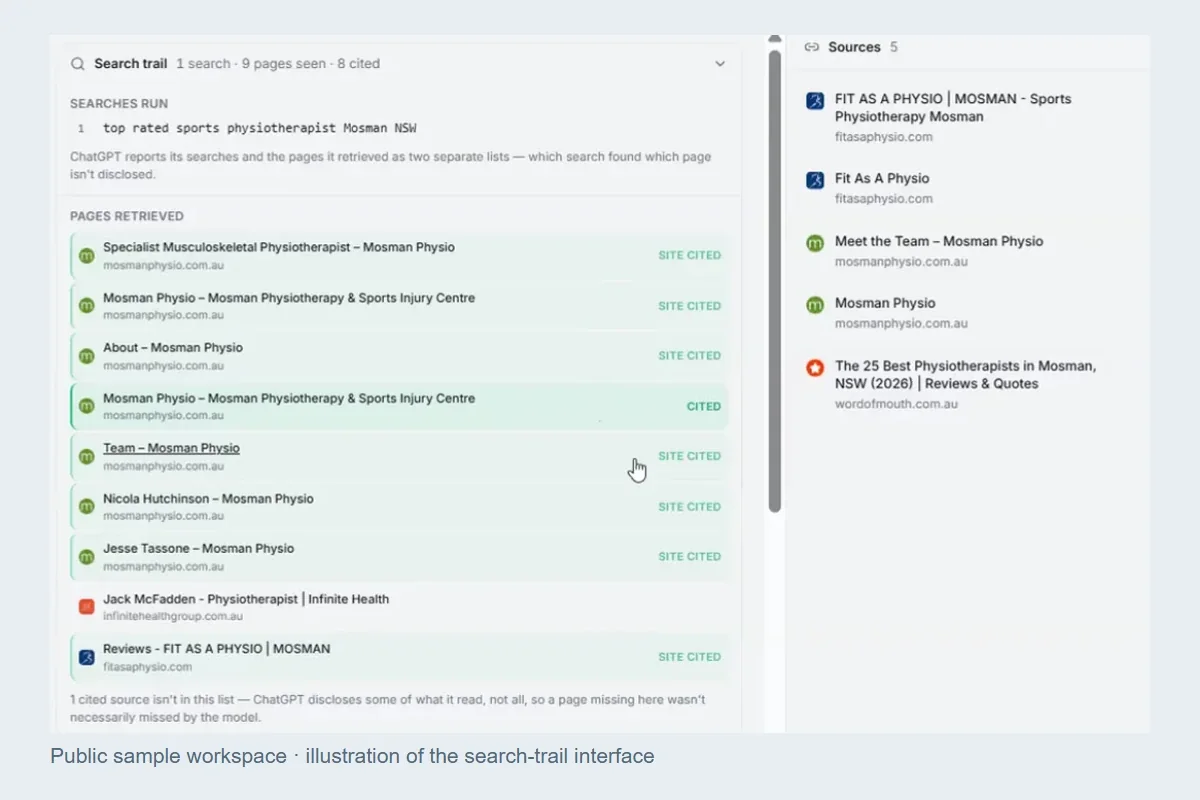
Read the guideA practical workflow for turning disclosed searches into page improvements, with an example from Reputably’s own tracking.
Read the guideA seven-day observation of Reputably’s own tracker: what the engines searched, what they cited and where the evidence stops.
Read the guide